Category: Community and learning in public

  • If you wanna be somebody, if you wanna go somewhere…..

    If you wanna be somebody, if you wanna go somewhere…..

    …..you better wake up and pay attention

    This is a journey of self discovery, but the more I think about it, the more I suspect that I probably have, and always have had ADHD.


    As with any disorder, it is common that it can be misdiagnosed, or even just thrown out there as an excuse for something (see also OCD).

    I have grown up with people occasionally throwing the term ADD or ADHD my way, but what do they know? I was perfectly normal, right?

    Anyway, I’ve been able to get on in life ok. I have a job that I love, some very tolerant friends and a wonderful family, who I appreciate so much.

    It is thanks to my eldest son that I have looked more into this. He started school this year and is turning into his own wonderful self, more and more. In this day and age, it is easy to attach a label to kids, especially ADHD, and then deal with however they are from there.

    Surely all little boys are a little distracted and not so easy to stay engaged? Maybe?

    Looking at the NHS website’s symptoms of ADHD, they list the following:

    Symptoms in children and teenagers

    The symptoms of ADHD in children and teenagers are well defined, and they’re usually noticeable before the age of 6. They occur in more than one situation, such as at home and at school.

    Inattentiveness

    The main signs of inattentiveness are:

    • having a short attention span and being easily distracted
    • making careless mistakes – for example, in schoolwork
    • appearing forgetful or losing things
    • being unable to stick to tasks that are tedious or time-consuming
    • appearing to be unable to listen to or carry out instructions
    • constantly changing activity or task
    • having difficulty organising tasks

    Hyperactivity and impulsiveness

    The main signs of hyperactivity and impulsiveness are:

    • being unable to sit still, especially in calm or quiet surroundings
    • constantly fidgeting
    • being unable to concentrate on tasks
    • excessive physical movement
    • excessive talking
    • being unable to wait their turn
    • acting without thinking
    • interrupting conversations
    • little or no sense of danger

    These symptoms can cause significant problems in a child’s life, such as underachievement at school, poor social interaction with other children and adults, and problems with discipline.

    https://www.nhs.uk/conditions/attention-deficit-hyperactivity-disorder-adhd/symptoms/

    Having read the lists on Inattentiveness as well as Hyperactivity and impulsiveness, I could resonate with a lot of them.

    But, I’m aware that it is easy to see yourself in situations and scenarios that you read, and in reality not fit with those things.


    One of my colleagues attended TestBash Brighton 2019, and in his recap of what he picked up at the conference day, he quoted something about implicit bias from Ash Coleman‘s talk. What we think is our bias, may not be. It was suggested to look at https://implicit.harvard.edu/implicit/takeatest.html


    I consulted Dr. Google, and came across totallyadd.com – apparently ADHD in adults hasn’t really had a lot of research, and is in its infancy. But, what a welcoming community it is, blogs, forums and so on.

    There is also a quiz that can be taken, to help inform. All with the proviso that nothing there will replace an actual diagnosis.

    That being said, I took the test and it was suggested that I could have The Combined Subtype of ADHD.

    Those of us with this type of ADHD struggle with Attention and Distractibility. We may be forgetful, sensitive, distracted, or overwhelmed by hectic situations.

    As well, like a majority of people who have ADHD, we also struggle with Hyperactivity and Impulsivity. We may feel restless, talkative, impatient, and have strong emotions. But also driven, curious, creative, with lots on the go.

    Together, problems with Attention, Restlessness, and Impulsivity make up the Combined Subtype of ADHD.

    (Some people struggle with Attention but not Hyperactivity or Impulsivity. They may be quieter, daydreamers, often lost in thought That’s known as the Predominantly Inattentive Subtype.)

    NOTE: ADHD/ADD is a spectrum disorder. So there’s a range of symptoms and severity. Some symptoms may be a constant challenge for you, others rarely.


    So, what does this mean for me as a husband, father and software tester in my mid-thirties?

    It’s safe to say that knowing this information will help to educate me and indeed my family. I need to be apologetic to my wife when it comes to paying attention, staying on-task and so on. Her patience is a daily blessing.

    As for my boys, ADHD can be hereditary, so it’s possible that they could have it as well. The good news is, that I turned out ok…..I think. The more we learn, the more we can work together through it. Talking about it is important, as with any mental health issues. It is normal, it is life and I wouldn’t change it.

    For my job as a tester……well I think it’s kind of ideal.

    But also driven, curious, creative, with lots on the go.

    Testers often have a lot on the go, we are a driven group and two of the most important attributes of a tester are curiosity and creativity.

    • I always want to learn more
    • Repetitive tasks turn me off
    • I am able to be reactive to various situations
    • I can quickly learn new information and share
    • When something catches my interest, boy does it stick. See:
      • Wrestlers of the 90s
      • Football (soccer)
      • Countries of the world (and capitals)
    • With the resources out there now, I don’t need heavy text books, I can read blogs and Tweets

    Now maybe this post is a little bit of a meander through my thoughts, but it is important to recognise who we are and how we can work better. In previous posts regarding soft skills, communication and coaching, I have touched on the importance of self-awareness. Being self-aware is what can make or break us in a work environment.

    This is me as I become more aware of who I am. It is still early in the journey. But, it’s an interesting one.


    Blog post title lyrics from: Pay Attention – by Sister Act 2 Cast.

    Find all the songs from my blog posts at this Spotify playlist.

  • These are my confessions…..(as a Huddler)

    These are my confessions…..(as a Huddler)

    Updated November 2019

    So with UKSTAR 2019 passing and EuroSTAR 2019 fast approaching, I’m building toward my fifth stint volunteering in the Community Huddle(at EuroSTAR and UKSTAR*).

    *other wonderful conferences are available

    It’s a long old slog, but a very rewarding one, here’s my way of running my very own retrospective of them all to date….in no particular order, and then what I am looking forward to this year.

    And then looking forward to EuroSTAR 2019, where I have a new responsibility as 2019 Community Huddle Host….what that means, what I’m looking forward to and what my goals are.

    You can meet the 2019 Volunteer Team here – it links to this website, so you could go all meta, if you so desire.


    What is the Huddle?

    This community huddle has two guises:

      • The online community presence of EuroSTAR; blogs, tester’s chat, webinars etc. are hosted from there. https://huddle.eurostarsoftwaretesting.com/ is where you can find it. That isn’t the focus of this blog, as I can’t confess to have contributed to that. It has had a recent facelift, so check it out!
      • The expo booth hosted at EuroSTAR and UKSTAR conferences, formerly the Community Hub.
        • For EuroSTAR 2019, I have written a little intro to my vision for the Community Huddle.

    I’m honoured to be the first Huddle Director, leading our wonderful team
    of volunteers in the Huddle area at EuroSTAR 2019.
    Some of the greatest and most valuable experiences I have had
    attending conferences have been through the conversations that I have
    had with my fellow testers. That is why the Huddle exists! The Huddle
    is hosted by the testing community for the testing community. We have
    three distinct areas, and I want to invite you to explore them all.
    The Test Clinic is where you can discuss, debug and dive deeper oneto-
    one with an expert in the field of testing. Our volunteer doctors will be
    joined by some guests from different testing fields with whom you can
    book your sessions, to get to the bottom of your testing issues.
    The Test Lab is where you can get stuck in, our team will be hosting
    games, puzzles and hands-on activities where you can learn by doing
    and practically enjoying our craft.
    The Huddle is the heart of the people side of testing, we will
    have games, couch sessions with some of the speakers,
    and your opportunity to get up on the soapbox
    and share your ideas!
    Browse the timetable of events in the guide, which is
    just a small sample of what is happening. Please
    come and say hello to any of the volunteers,
    get more information and keep an eye out
    for announcements via the Whova app, as
    well as Instagram and Twitter using the
    hashtag #EuroSTARConf.
    The Huddle is here for you. So
    make sure to get involved, to meet
    delegates and make the most of the
    opportunity to learn, share, explore
    and connect.

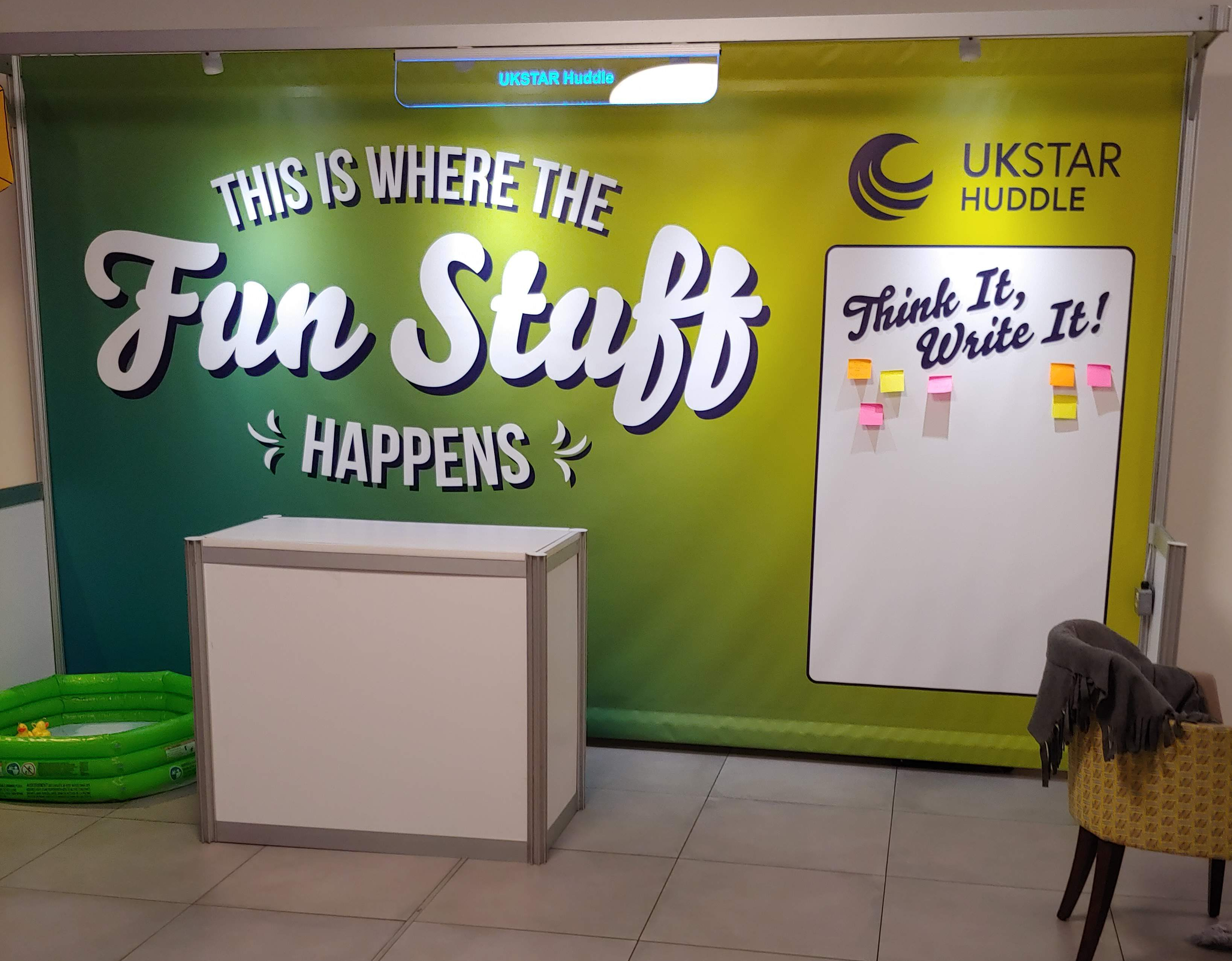
      • The UKSTAR conference’s team wrote a nice little intro to this year’s UKSTAR conference here. I would say, there was some added pressure with the message on the sign:20190311_093317.jpg

    How did I become a Huddle volunteer?

    This was pure chance.

    I follow a lot of Twitter accounts, if I find the word tester in the bio, I’m likely to follow. One such account is EuroSTAR’s Huddle account. I was browsing Twitter one evening; while sitting on the floor of my youngest son’s bedroom, whilst I held his hand to help him sleep; and came across a call for volunteers for the upcoming EuroSTAR conference in Copenhagen (2017). There were four areas that you could volunteer: Cadets, Test Clinic, Test Lab and the Huddle.

    The Cadets help to facilitate the conference, they steward and help out wherever required, they were everywhere and they are awesome.

    The Test Clinic volunteers get to wear special doctor’s jackets and are there to help solve some issues, again they are selfless and awesome.

    The Test Lab is where demonstrable testing takes place, from robots and coding to bug hunts and other fun activities, it’s a hustle and bustle that is so much fun.

    The Huddle though, it stood out for me. When I talk about what my favourite aspect of testing is, I always go to the people side of things. I love people, I love coaching and getting the best out of people and I love sharing stories and experiences.

    I also had the experience of being massively overwhelmed at that very conference, and wanted to enable others to get more out of their conference experience than simply the wide range of talks on offer.

    Conferences of any size can be a lonely place, and all you need sometimes is a friendly face.

    Also, volunteers received a free conference ticket, which they should, of course. I don’t think I could have attended any other way.

    As I mentioned in All I know is I’m lost without you…. , at my workplace, we encourage testers to be engaged with the wider testing community, including blogs, meetups, and conference attendance. So, walking the talk, is important.


    What went well?

    To keep from writing a full retrospective, I’ll just list things here:

    • Lean coffee – even if this isn’t the most well attended event on the calendar, candid and useful conversations always take place in these sessions.
    • Couch sessions – these are where speakers at the conference are invited to ‘host’ a more intimate and informal session on a topic of their choice, within the Huddle space…..where usually we have couches. I’m often in awe of these ‘famous’ testers who are willing to give their time to share their wealth of knowledge and experience with our keen minds. At UKSTAR 2019, we introduced Huddle stand-ups, as we didn’t have couches, and made them less formal bringing the topics of discussion to the forefront.
    • Soapbox sessions – much like a lightning talk, willing delegates are given time to propose ideas, share thoughts and speak to the local Huddle audience on a wide array of testing topics, I’ve been inspired by some of these talks more than some of the track sessions.
    • Introducing new ideas – I could have wrapped these into the preceding three bullet points, but I wanted to emphasise the value in having a space to talk about, and demonstrate new ideas to people. I am a visual learner, and this is right up my street. At UKSTAR 2019 alone, we introduced a forum on meetups and also TestSphere, with RiskStorming.


    • Games and prizes…..we all love swag, and how we facilitate that, be it through selfies, duck pond, beer pong or other, it’s always worth it.
    • Stickers!!! – delegates are invited to decorate their lanyards with stickers, not only with national flags, but also punny or proclaiming test type stickers, they can act as conversation starters, or laptop decorations.
    • We have run first timer networking sessions, discussion spaces for celebrating women in tech, and other fun and informative sessions.

    What didn’t go well?

    Not everything goes to plan, we are humans and we are fallible.

    • We’ve had couch sessions planned when there was a fire alarm.
    • At EuroSTAR 2018, we replaced the Soapbox with a stage, that was apparently too intimidating, and only one (Ioana) braved the stage.
    • We’ve given away too many prizes too soon.
    • We’ve given away too few prizes, and had too many left over at the end.
    • I have hosted solo at the UKSTAR conferences, and when I have attended talks, track-chairing or other, I haven’t been present for delegates to interact with at the Huddle (blessing in disguise?).

    There’s probably more things, I’m maybe too close to the Huddle to see all areas of improvement.

    Why did I come back for more?
    return

    On one hand, it was ego. They seemed to like me, and asked me back. Words of affirmation can be motivators, and I am not shy to admit it.

    Conferences are a huge source of impetus, recharge and inspiration. The medium of talks, in a live environment are second to none. I am always more engaged in such an environment, than via its online counterpart, the webinar. The presence of a speaker, whether it be hugely energetic, funny, raw, emotional, honest and humble, captures my attention and enables me to learn more from their experiences, than I ever could in written word. I have used several talks that I have attended as points of reference for blogs, in conversations with colleagues or peers and expect to do so more.

    I get so much from interacting with other testers. Sharing ideas, anecdotes, struggles and so on, is such a great way to learn and also to teach. Testers are naturally keen learners and we often teach organically, conversations create content, drive our development both personal and professional and feed into our working lives.

    If I didn’t feel like I was doing a good job, I would stand aside. I don’t know how I will feel if I attend as a delegate (or maybe, even a speaker one day) and am not on the Huddle.

    How could things be improved?

    I’d like to think that things have incrementally improved on each occasion, but I honestly believe that all things have potential improvement, and am critical of my own work, always.

    Back when the Huddle was the Hub, they had a backdrop that was a black chalkboard-esque wall, it was a space where there could have been the opportunity and space for those who have artistic tendencies, to express themselves. Now, I’m not very artistic, but I would love it if we could include such a space in the Huddle.

    It’s fair to say that for some, that the hustle and bustle environment during the break times at a conference, can be pretty overwhelming, and the last thing that you would then want is to go to somewhere with a lot more stimulation. Sometimes there is a real need to chill, and to have somewhere for quiet solace. I don’t know whether that’s something that could be facilitated in the Huddle, but I do think that it would be a valuable space.

    So, I’m back as Huddle Director, what does that mean and how is it different?

    Firstly, to be asked to come back is a massive honour, and to do so as someone who will coordinate the Community Huddle Team is incredibly humbling, exciting and terrifying.

    What we have looked to change this year is a greater coordination, feeling of togetherness and team across all three disctinct areas.

    This will be addressed in the positioning of the three areas together in the expo, not divided, but together, to offer a wide range of activities and chances to engage with others, in one place.

    We will still have the the Test Lab with hand-on activities, the Test Clinic with problem solving one-to-one deep dives and the Huddle with all the other highly enjoyable madness.

    We will have a more joined up timetable and we won’t be bound by our specific areas.

    There are many ways conferences plug events and encourage interaction at conferences, and as of UKSTAR 2019, Whova has been the app of choice, this will continue with EuroSTAR 2019, I love engaging with the community, and having ‘won’ the leaderboard at UKSTAR 2019 I’ll try and make it a double in Prague.

    Screenshot_2019-10-22-10-18-29-121_com.whova.event

    Beyond that, there will be a quiet room, which will be a tech free zone….I forget what that’s like sometimes.


    That’s all very nice Chris, but it’s not much of a confession….

    That’s probably fair, so here’s the struggle.

    There is a sacrifice to be given, to serve the community. That is time and to a lesser degree financial.

    I want to concentrate on the former here.

    It is exhausting.

    The advice I give to those attending is to take time for yourself, so you don’t burn out. Conferences can be full on, and you want to attend everything. So, imagine doing that, and hosting a community booth, where you are constantly engaging and networking, discussing and sharing your great enthusiasm for a duck pond.

    I have now learnt how to manage that, but it is not easy.

    The harder part though, is time away from family.

    missmyfamily

    We have a lovely family unit, and I always feel guilty when I am away. My wife works incredibly hard and she doesn’t get a break when I am away. I can only thank them for the support they have given me over the years.

    I always look forward to returning home, they are the reason that I am motivated to continuously improve myself, and I love them all.

    theresnoplacelikehome


    Blog post title lyrics (-as a Huddler) from: Confessions Part II – by Usher.

    Find all the songs from my blog posts at this Spotify playlist.

  • The long and winding road…..

    The long and winding road…..

    …..that leads to your door

    Dealing with mental health is important.

    I don’t think I ever really appreciated that until a few years ago.

    I don’t think I really even understood what mental health even meant.

    I am only just now beginning to understand what it is. If I look retrospectively at my own life, how I have coped (or not coped) with various events and emotions, who I am and who I was, it makes me feel uncomfortable, these feelings can leave a permanent mark. But, with the power of hindsight and a growing awareness of mental health, I can begin to understand a process these things.

    smartboardmarker


    I love my commute….said no one ever?

    In a previous post, I  touched upon the value that I place on face-to-face communication. And for me, I think it goes a little deeper than that, unlike what feels like an ongoing trend, I am not a fan of working remotely, to the point where I drive a 120 mile round trip to the office every day.

    I moved house last year, and in doing so I extended my commute to the office by another ten miles each way. That takes some explaining to people.

    We moved to be closer to family than we were, we have a young family and no one likes a four hour drive. But, I didn’t want to change my job, I like my job. So, I made a spreadsheet and got a map, taking into consideration distance to work and distance to family. We had a budget and we had a timescale and eventually the move came about with a couple of weeks to spare.


    Why would anyone willingly drive that far?

    It’s a good question, and one I answer a lot. To the point where I probably answer in auto-pilot mode half the time.

    I was already commuting a near 100 mile round trip when I took this job, so what’s another 20 miles between friends?

    My drive is my time, it is an hour in the morning and an hour in the evening when I am in my own company, I can process my thoughts, I am not trapped in a screen time loop (Google Maps aside), I can listen to some quality podcasts (see All I know is I’m lost without you…. for some testing blog suggestions), smash out some power ballads uninterrupted and really be able to tap into the benefits of the diffuse mode  – see https://tedsummaries.com/2015/03/04/barbara-oakley-learning-how-to-learn/

    Life is busy, work is busy, having a family is busy…..

    IMG_3531

    This is my boys in their normal mode.

    Sadly, I don’t have a picture of the development department at work for comparison, but use your imagination.

    Time out is important.

    Are there any benefits?

    I don’t have a man cave.

    An emotional sanctuary for men when they’re stressed and need “space” or time away from females, responsibilities, etc.

    Sam went offline and wouldn’t answer calls, retreating to his man cave to think.

    #emotional withdrawl#silent treatment#communicating#verbal#retreat

    From <https://www.urbandictionary.com/define.php?term=man%20cave>

    Since we moved, our spare room is full of boxes (metaphor for technical debt?). And life is busy.

    So, my commute is a little like my version of a man cave.

    Surely there are costs?

    Financial costs are higher, running a car increases the more you drive.

    Time cost is the big one, I love my family, and despite what I have said about needing solace, I need my family. My boys and my wife are what motivate me, inspire me and keep me going. If my commute was halved, then I’d have an extra hour a day with them. That is tough.

    How does that impact my mental health?

    Fortunately where I work, we have flexible hours and management who understand the importance of family and work/life balance.

    I’m not a big sleeper, so I can get up before the boys wake up and make sure I’m at home for family dinner, bath time, bed-time stories (however repetitive some of those are) and valuable time with my wife.

    At my work, we have had more and more mental health awareness talks, signage and even team members attending Mental Health First Aid courses.

    We have regular 1:1s, and I know that if I’m struggling I have the support required.


    At EuroSTAR 2013, I attended a talk by Pekka Marjamäki entitled Testing Me, he touched upon the opportunities he found when presented with a longer commute, but also the challenges and ultimately where he found himself wasn’t in a good place.


    I am still working through these things, but I plan on exploring them more through some future posts.

    I have been considering a post by Danielle Zeigler, where she outlines 27 Simple Ways To Recharge Your Batteries and already a few jump out as some that really resonate with me:

    • Get outside during lunch. Take a walk, eat outside, go to a local cafe. The main point is to get away from the office and your computer screen.

    This is something that has been a bit of a new year’s kick for me and some colleagues, it’s definitely good to stretch the legs.

    • Take a mental health day from work. Watch your favorite movies, meet up with a friend, walk around your neighborhood, see a matinee movie. Sometimes being “bad” is just what you need.

    I am working on this, it can be hard sometimes to totally disconnect, I’m using things like IFTTT and do not disturb modes on my smartphone so that I don’t get involved in work things at home.

    • Start a bucket list. Thinking about your goals in life will help you focus on the big picture and what will truly makes you happy.

    For me, this springs from conversations that we have at home, what we want to do, where we want to go….it’s all about Disney World!

    • Create something. Work on one of those projects you’ve neglected…

    I’ve taken a small bit of artistic license, and removed the Pinterest reference in this point, but creating is something I love to do, this blog is a vehicle for me to be creative!

    • Take a 20-minute cat nap.

    This is more something I’d love to do. I love a good nap.

    • Exercise! Aim for 30 minutes of medium-high intensity exercise every day. It doesn’t have to be all at once. Regular exercise will help regulate hormones (hello, endorphins!), increase circulation and often helps people clear their minds and reduce stress.

    Lunchtime walks aside, I have joined my local tennis club and am really enjoying it. It is energising.

    • Make a playlist of all of your favorite songs. Play them at home or take a drive and sing along at the top of your lungs.


    Take a look, see what you can do. Don’t be afraid to talk about your mental health.


    Blog post title lyrics from: The long and winding road – by The Beatles.

    Find all the songs from my blog posts at this Spotify playlist.


  • I know how it feels to be the loneliest…..

    I know how it feels to be the loneliest…..

    …..welcome back outcasts

    Why do we attend conferences? Read blogs? Watch webinars?

    How do we engage?


    I asked this question to my testing colleagues at work…

    Here are the results…

    Topics –

    • why you enjoy working
    • explaining how things work
    • topics that aren’t directly test related (e.g. mental health)
    • speakers from companies you’ve heard of (and love their products)
    • lessons learned from experiences
    • good news stories
    • psychology of testers/testing
    • multi-track options (sometimes)
    • relatability
    • automation experiences

    Diverse speakers/writers, length of talks/blogs, topics, levels of production etc.

    Interactive workshops (such as, the Lego Automation workshop by Richard Bradshaw as mentioned in I’m not afraid, they can read all about it…..)

    Humour

    Being a part of a community, belonging

    Networking (drinks) – meeting other testers, sharing stories

    Meetups

    Meeting with and interacting with people you’ve followed online, read their blogs

    Good venue that’s easily accessible

    Great catering

    New ideas –

    Swag (more notes on this than any other!!)


    hotornot

    People selling themselves, or their products (perception of consultant culture)

    Cliques, or the appearance thereof

    Narrow or overly opinionated viewpoint, portrayal

    Intimidating environment (huge expo, easy to feel lost, lonely)

    Blank/empty slides –/– too many words on slides

    Appearance of ‘script-reading’, unrehearsed

    Prohibitive price

    Lack of diversity, both in topic and in speaker (we don’t use Selenium or test web API)


    This is obviously a small sub-set and we have seen a lot of benefits to attending conferences.

    Ministry of Testing are doing a great job making TestBash more inclusive, they have quiet spaces, open space on their final day and next year in Brighton, they’re even going to have a child care option.

    Many conferences have meetups outside of the conferences, early morning runs, swims, lean coffees etc.


    At EuroSTAR 2018, in the Hague, I will once again be volunteering in the community huddle, as part of the expo.

    We aim to be a welcoming place in a very busy and vast space. My aim in this conference is to try and tick off as many of the ‘Hot’ items and to address some of the ‘Not’ items as part of the Huddle team.

    We will be hosting games, quiet spaces, stickers….awkward looking people with a hook-a-duck game

    https://twitter.com/UKSTARconf/status/973163928112058368

    Soapbox talks…

    And couch sessions with some of the conference speakers

    We aim to make delegates at the conference welcome, to help them to engage and get the most out of their conference experience.


    If you’re coming along this year, come along and say hi.

    If you’re going to any conference, before you go, try and make a checklist of things you really want to learn, hear, talk about, people you want to see etc.

    Take notes, see what you can take back to your workplace.

    Know your limits, make space for yourself, don’t burn out. If none of the talks in one session appeal, don’t feel obliged to go to one, we all need time to process things and conferences can be really intense.

    If you’re a more experienced conference goer, keep a look out for new guys, it’s not always easy to step out and start a conversation, especially in what can seem like an alien or intimidating environment.

    Most importantly, have fun, engage and don’t leave with regrets.


    Blog post title lyrics from: Welcome to the new south  – by Less than Jake.

    Find all the songs from my blog posts at this Spotify playlist.

  • I believe the children are our future…..

    I believe the children are our future…..

    …..teach them well and let them lead the way.

    I have recently had a couple of conversations with colleagues who know people who would like to get into testing.

    Great.

    But how does that happen? It’s not like you can make someone ‘fall into testing’, as so many of us profess to have done.

    Should I point them straight to the ISTQB Foundation certification? It is after all, a prerequisite of so many job adverts.

    Do we reference wikipedia for some nuggets of information on the topic?

    As I was seeking to find the best explanation, I was reminded of the good work on this topic that Simon Prior has done with his #makeatester campaign.

    I would strongly recommend looking through his blogs on the subject, maybe starting here.

    Ministry of Testing have an awesome article by Heather Reid called ’30 Things Every New Software Tester Should Learn’, that is an amazing first port of call.

    Quotefancy-902782-3840x2160

    With that in mind, I ran a test team meeting with my fellow testers, earlier this year, looking at our own thoughts.

    The questions and answers are as follows:


    So, why are you a tester?

    • I find faults in products easily
    • I do things differently than most (in an ‘ugly’ way)
    • I am drawn to edge cases
    • I am pedantic
    • I like people
    • I love the constant variety
    • I can make a difference
    • I fell into it

    And what attributes/characteristics help to make a good tester?

    • Spatial awareness
    • Self confidence
    • Thinking outside the box
    • Good communication
    • Luck
    • Pragmatism
    • Critical thinking
    • Curiosity
    • Perfectionism
    • Strong eye for detail
    • Creativity
    • Quick to learn
    • Flexibility
    • Not being a sheep
    • Able to confidently speak your mind
    • Being able to look at the bigger picture
    • Being able to break stuff

    What do you think would be a good background for a career in testing?

    • ANY
    • Creativity – the arts
    • People skill based
    • Diplomacy – politics?
    • Technical
    • Games
    • Stats
    • Diversity is key!

    And what motivates you, as a tester?

    • Continuous improvement (both self and the workplace/product)
    • Always learning
    • Variety
    • Teaching/coaching
    • Making a difference
    • Money

    What do we think is our purpose in our workplace?

    • Quality advocates
    • To raise awareness and improve the testing skills of our colleagues
    • To be inter-departmental conduits
    • To make the user’s experience better
    • To inform
    • To help others see the whole/bigger picture.

    I think it’s fair to say that there is a decent spread of answers there, we are a relatively small team of testers, but we have a strong voice. While we are all testers, we have different skills, backgrounds, characteristics, motivations and perceived places in our workplace, but we are united.

    The goal that we have when we recruit new testers is not to recruit a perfect candidate, someone that can tick all the boxes and the last thing we want is someone who is identical to us. The beauty of testing is in its rich variety and diversity.


    segue

    For me personally, I find standing out, seeking niche or untapped areas, so very appealing. It is for that reason that I have sometimes struggled in group settings where I have perceived that another in the group has the same mindset or mannerisms to myself.


    I love meeting new testers, we bring so many different ideas to the table, if you are even only slightly intrigued by the prospect of testing, I would heartily encourage you to visit any resources from Ministry of Testing or the Test Huddle, better yet – get in touch with any testers you know, talk to them about their experiences. If you don’t know any, I know that Simon is always keen to #makeatester and you can get touch with me too.


    Blog post title lyrics from: Greatest love of all – by Whitney Houston.

    Find all the songs from my blog posts at this Spotify playlist.

  • What’s love got to do, got to do with it…..

    What’s love got to do, got to do with it…..

    …..What’s love but a second hand emotion.

    Happy Valentine’s day to you!

    As I watched an episode of 12 Monkeys last night, I was struck by a piece of advice thrown into scene setting part of the episode, received by one of the main protagonists, by their father.

    “It’s the heart, not the mind that sustains us.” – Mr. Werner

    12 Monkeys S. 1 Ep. 12 ‘Paradox’

    The heart and love, in this context are inextricably linked, but while romantic love takes the headlines today, it is passion and a love for what we do and with whom we share that love that sustains us.

    I  recently, along with a collection of my colleagues, had the experience of fronting a recruitment video for my employers.

    One of the big themes of the video is what it is like to work in this environment, with these people. There wasn’t a script and there is genuine enthusiasm on display for the workplace.

    Speaking to some of my friends, it saddens me to hear that so many aren’t enjoying their jobs. In fact, many dread Mondays…I think it’s even the theme of a well known recruitment agency.

    markanthony

    I’m not entirely convinced that the former Mr J-Lo is the true source of this quote, but he has a nice smile, so we’ll go with it.

    “When something you love becomes work, it fundamentally—and unavoidably—changes the way in which you interact with it.”

    Chrissy Scivicque conjectures that this belief is a fallacy in her piece in Forbes, but surely there has to be some sort of happy medium?


    As I write this today, I am a software tester, I started testing software in 2004 and it is still what I do and it is a part of my identity. The origins of my testing career has often been described a ‘falling into’ testing, but I think that discredits the craft, in agreement with Katrina Clokie‘s tweet.

    The longer I have been a tester, the greater the enthusiasm I have for it. This is true because testing is so diverse and I always have the opportunity to learn more.

    I’ve attended job fairs and acted as a STEM ambassador in the Engineering Education Scheme (EES), always advocating the craft of testing as a career path to pursue.

    huddle

    I was a host at the EuroSTAR Community Huddle, a role I will reprise at UKSTAR this coming March. The Huddle is a space for a confluence of testers, games, conversations, inspiration and support. It highlights how great the community of testers is, where we can celebrate testing in all shapes and sizes, it is a people profession and the people are awesome.

    lovetesting


    Blog post title lyrics from: What’s love got do with it – by Tina Turner.

    Find all the songs from my blog posts at this Spotify playlist.

  • The inability to produce a thought…..

    The inability to produce a thought…..

    …..Ideas get stale, brain cells rot.

    I’m normally a man of many words.

    Throughout my life, I’ve had an ability to brain dump with relative ease, even if the end result needs a little tweaking. Anyone who has read my blog posts may be able to attest to that.

    I haven’t written a blog post in a while though, even though I’ve started maybe three and have them in my drafts, lost and awaiting inspiration.

    With this post, I’m hoping to break that block….we’ll see how that goes.

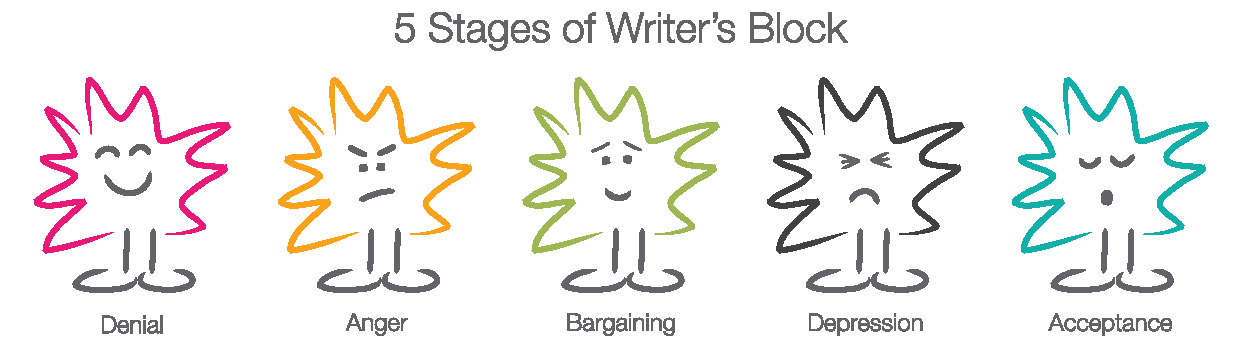
    5Stages-WritersBlock


    I have found while writing test plans, or test cases, procedures or documentation; a break can refresh, change perspective, distract and inspire.

    Simple things like taking a walk, making a cup of tea, or quickly browsing for the latest cat memes. Amazing what you can think of while doing something else.


    I attended EuroSTAR in Gothenburg, in November 2013 and aside from finding the amusingly named chocolate brand Plopp, the highlight for me was the talk by Zeger van Hese (@testsidestory) on the subject ‘Testing in the age of distraction’. The YouTube video of this talk can be found here.

    This is a great talk and I encourage you to take the time to listen to it all.


    I will be spending next week at EuroSTAR in Copenhagen, as part of the Community Huddle team.

    I am excited to meet a huge variety of testers from all over the world, engaging with and inspiring each other.

    Conferences have a canny knack for reinvigorating and inspiring, I will meet this week with great expectations and anticipation.

    If, you’ll be at the conference, please come and say hi, get engaged, plugged in and get the most out of your conference experience.


    Blog post title lyrics from: Writer’s block – by Fatlip.

    Find all the songs from my blog posts at this Spotify playlist.

  • Well, who are you?…..

    Well, who are you?…..

    …..(who are you? who, who, who, who?)

    Inspired by the TestBash Brighton 2017 talk ‘Rediscovering Test Strategy’ by Mike Talks, this is my retrospective on me when I started as a tester in 2004 and today, in 2017.


    I’ve tried to break it down into nine questions:

    1. How do you describe your job to your friends and family?
    2. What do others think that you do?
    3. What’s your motivation at work?
    4. Do you want to be a professional tester? Do your peers?
    5. What heuristics do you use?
    6. What are the objectives of your job?
    7. What is the perception of your role from other disciplines within your organisation?
    8. Do you work in Waterfall? Agile? DevOps?
    9. What does your kit/setup look like?

    1928982_512715080458_3808_n

    Me at Leeds Festival 2004.

    1. I am a games tester.
    2. An extension of Uni, frat-party-esque, bean bags et al.
    3. This is a summer job, while I’m at Uni. It’s better than working in retail. Plus, I get my name on the credits of some games (at this point, I hadn’t worked on any games that I would consider embarrassing).
    4. I have no concept of testing as a profession. I view it as a stop-gap, before I get a ‘proper’ post-grad job. Most of my colleagues view this as getting a foot inside the game development industry with the aim to work in other departments – audio, production, design, art, programming etc.
    5. I don’t know what heuristics are, but we use excel ticksheets for test coverage, we raise, track and verify bugs.
    6. It feels like we are judged based on bug count or verification count, alone. Other objectives might be to make nice with the team leader to get better tasks assigned to me.
    7. Testing feels like it is the bottom rung, that no one wants to be a tester, no respect for the discipline, communication with the dev team is strictly by the seniors/team leads, your only communication with devs is via bug comments.
    8. This is waterfall, test gets the code late on (backs against the wall) and it is near-guaranteed that there will be so much overtime (my record was 120 hours overtime in one month).
    9. Unless you are the chosen one, small CRT monitor with a team digital camera (or if you were lucky, a VCR). Intranet-access-only machines for email and bug tracking. Headphones (in various states of repair) that must be worn at all times.

    cropped-dsc05231.jpg

    2017 Me stuck in a tree. There’s a metaphor there, I’m sure.

    1. I am a software tester (that’s not my job title, but it is what I am). When talking about my job, I concentrate on what the product is that I test – only concentrating on practices/heuristics if they are in on the whole SDLC fun.
    2. Anything ranging from IT, websites (whatever that means), to test robot. Hopefully this blog may shed some light on things.
    3. My goals are clear, I aim to:
      1. Improve the product that I work on.
      2. Improve myself.
      3. Be a positive influence on those around me, and if called for a mentor, or coach.
      4. Be an advocate for quality and a loud voice for test.
    4. Absolutely.
      1. This is my career of choice (regardless of how it started). I don’t desire to be a developer, or a project manager. This is not a path to something else. This is who I am.
      2. I hope my peers aim to be (and stay) professional testers (see Huib Schoot’s blog – “Heuristics for Recognizing Professional Testers” ). Since starting in my current role, I have tried to introduce them to the wider testing community, I have started this blog, sent them interesting blogs to read, shared talks, encouraged them to attend conferences, bought TestSphere, talked more about testing as a craft, attempted to empower and encourage them.
    5. Yes please to all heuristics, sure experience may lead me to try some old favourites, but variety is the spice of life and new heuristics, approaches and charters will hopefully lead to a better tested product.
    6. Better:
      1. Product.
      2. Practices.
      3. Communication.
      4. Cross-discipline interaction.
      5. Us.
      6. Me.
    7. When I started my current role, I wanted to find out what the wider perception of my team was, so I sent out a questionnaire to the development dept. to find out. From that, I saw that there was real value seen in my team, what a great platform on which to build!
    8. We work in an Agile environment, developers and testers in happy harmony.
    9. We have whatever we need, there is no kit empire building, it is no issue.

    I must say that when I left the games industry in 2011, my experiences and perception of testing in that environment had changed from my initial stint. But, I still wanted to do something else……that was software testing outside of gaming, and it has been the best career path I could have taken.


    Blog post title lyrics from: Who are you – by The Who.

    Find all the songs from my blog posts at this Spotify playlist.

  • Work it Make it Do it Make us…..

    Work it Make it Do it Make us…..

    …. Harder Better Faster Stronger.

    TestBash Brighton 2017 delivered so much, there have been some pretty comprehensive blogs about the conference day already. A good example of which is:


    I’m going to concentrate, for now, on the workshops I attended on the Thursday.

    As I mentioned in Look around you, do you see those faces…..

    Essentially, conferences should be there to provide recharging of batteries, new ideas, reassurance and a fresh testing perspective.

    For this blog, I’m going to concentrate on the morning session ‘Thinking and Working Visually for Software Testers’ as led by Huib Schoots.


    As a side note Del Dewar covered the correct pronunciation of Huib’s name on the Friday.


    I am no artist and yet I find myself drawn to diagrams, flow charts, mind maps and such, as opposed to written documentation. I think I even took one of those online tests (super credible) and it suggested I was a visual mathematician, whatever that means.

    For me, I was looking for any techniques and tips to be able to use some of these in my day-to-day work.

    Huib got us to start drawing straight away, but not before asking us to describe, in pairs, our house to each other. Then, taking a short while to sketch our homes and repeating the exercise again.

    This immediately highlights the power of pictures, no matter how badly we draw them, the mental picture one can create with these stimuli outweighed the power of words.

    Examples were given, from IKEA instructions to road signs.

    Huib allayed fears of not being able to draw, empowering us all to express ourselves however we could and encouraging us to practice simple things. As with anything, practice can make perfect passable.

    We were pointed to The Sketchnote Handbook for further reading.

    The session gave us the chance to try:

    • Sketchnoting to TED talks.
    • Design test cases in flowchart form.
    • Using mindmaps to present, in pairs, ourselves to each other in pairs.
      • Huib showed us his CV in mindmap form.
    • Mindmaps as test plans.
      • Mindmaps into test cases.
    • Session notes – note-taking for conferences and classes.
    • Test coverage outline – this is something I’ve been trying to get my head into since I started at my current role last summer.
    • James Bach’s Heuristic Test Strategy Model and SFDIPOT (page 4).

    There was so much to takeaway from this session and my head was spinning.

    I must confess that I didn’t take session notes in any of the talks, which meant that I wasn’t able to start processing all that I had taken in until I got home.

    The slides contained more than enough reference material to keep me busy for weeks, but even with just the session as a stand-alone point of reference, I will:

    • Present more ideas in sketch form.
    • Keep a note book with me, to capture thoughts as and when they come rather than trying to do so retrospectively.
    • Try test strategy/plans/coverage in mindmap form.
    • Play with flowcharts, handwritten and online, more.
    • Try to communicate better, and more visually!

    Thank you Huib.


    Blog post title lyrics from: Harder, better, faster, stronger – by Daft Punk.

    Find all the songs from my blog posts at this Spotify playlist.

  • Look around you, do you see those faces…..

    Look around you, do you see those faces…..

    …..what do those faces tell you?

    What are the benefits of attending conferences?

    1391180282702

    I won’t lie to you, conferences can be a lot of fun, but they can also be a drag. There are lots of things that make up a good conference experience, including:

    • Good presenters
    • Good venue
    • Relevant topics
    • Fostering a sense of community

    So, why do I attend conferences? Will anything change at work when I go back to the office?

    I touched upon conferences in an earlier blog, All I know is I’m lost without you….

    not only had I never attended any conferences or meetups, but that I had absolutely no awareness of the wider software testing community, practices, ideas, heuristics, blogs or anything that is so cool about being a part of the software testing community.

    With the greater awareness of community, not only is there a sense of belonging to something bigger than just your own local environment, but also a wide resource of help, support, information, sounding boards and so on. Ministry of Testing has Slack which is a great resource, but nothing can beat human interaction.

    This year I’ll be attending TestBash Brighton, for two days, structured as two half-day workshops and then a single stream of talks.


    From last year’s conference I took Lego Automation back to my office, as I touched upon on World Book Day, I’m not afraid, they can read all about it…..

    I also learned about Test Mobbing and Pairing, and we have tried that here too, blogged about here – One thing I can tell you is you got to be free…..

    Not to mention a whole smorgasbord of new Tweeters to follow.


    Essentially, conferences should be there to provide recharging of batteries, new ideas, reassurance and a fresh testing perspective.

    If you don’t get that from the conference you attend, you should try another.

    TestBash-Brighton-Attending-Badge


    Blog post title lyrics from: Faces – by 2 Unlimited.

    Find all the songs from my blog posts at this Spotify playlist.