Blog

  • I believe the children are our future…..

    I believe the children are our future…..

    …..teach them well and let them lead the way.

    I have recently had a couple of conversations with colleagues who know people who would like to get into testing.

    Great.

    But how does that happen? It’s not like you can make someone ‘fall into testing’, as so many of us profess to have done.

    Should I point them straight to the ISTQB Foundation certification? It is after all, a prerequisite of so many job adverts.

    Do we reference wikipedia for some nuggets of information on the topic?

    As I was seeking to find the best explanation, I was reminded of the good work on this topic that Simon Prior has done with his #makeatester campaign.

    I would strongly recommend looking through his blogs on the subject, maybe starting here.

    Ministry of Testing have an awesome article by Heather Reid called ’30 Things Every New Software Tester Should Learn’, that is an amazing first port of call.

    Quotefancy-902782-3840x2160

    With that in mind, I ran a test team meeting with my fellow testers, earlier this year, looking at our own thoughts.

    The questions and answers are as follows:


    So, why are you a tester?

    • I find faults in products easily
    • I do things differently than most (in an ‘ugly’ way)
    • I am drawn to edge cases
    • I am pedantic
    • I like people
    • I love the constant variety
    • I can make a difference
    • I fell into it

    And what attributes/characteristics help to make a good tester?

    • Spatial awareness
    • Self confidence
    • Thinking outside the box
    • Good communication
    • Luck
    • Pragmatism
    • Critical thinking
    • Curiosity
    • Perfectionism
    • Strong eye for detail
    • Creativity
    • Quick to learn
    • Flexibility
    • Not being a sheep
    • Able to confidently speak your mind
    • Being able to look at the bigger picture
    • Being able to break stuff

    What do you think would be a good background for a career in testing?

    • ANY
    • Creativity – the arts
    • People skill based
    • Diplomacy – politics?
    • Technical
    • Games
    • Stats
    • Diversity is key!

    And what motivates you, as a tester?

    • Continuous improvement (both self and the workplace/product)
    • Always learning
    • Variety
    • Teaching/coaching
    • Making a difference
    • Money

    What do we think is our purpose in our workplace?

    • Quality advocates
    • To raise awareness and improve the testing skills of our colleagues
    • To be inter-departmental conduits
    • To make the user’s experience better
    • To inform
    • To help others see the whole/bigger picture.

    I think it’s fair to say that there is a decent spread of answers there, we are a relatively small team of testers, but we have a strong voice. While we are all testers, we have different skills, backgrounds, characteristics, motivations and perceived places in our workplace, but we are united.

    The goal that we have when we recruit new testers is not to recruit a perfect candidate, someone that can tick all the boxes and the last thing we want is someone who is identical to us. The beauty of testing is in its rich variety and diversity.


    segue

    For me personally, I find standing out, seeking niche or untapped areas, so very appealing. It is for that reason that I have sometimes struggled in group settings where I have perceived that another in the group has the same mindset or mannerisms to myself.


    I love meeting new testers, we bring so many different ideas to the table, if you are even only slightly intrigued by the prospect of testing, I would heartily encourage you to visit any resources from Ministry of Testing or the Test Huddle, better yet – get in touch with any testers you know, talk to them about their experiences. If you don’t know any, I know that Simon is always keen to #makeatester and you can get touch with me too.


    Blog post title lyrics from: Greatest love of all – by Whitney Houston.

    Find all the songs from my blog posts at this Spotify playlist.

  • Are you ready, are you with me?

    Are you ready, are you with me?

    Team, team, team, team, team, yeah

    I finally managed to get a High School Musical song into a title lyric.

    So how are your team meetings? I felt that our test team meetings had gone a little stale, that they’d fallen into a little bit of going-through-the-motions and often involved me in front of a whiteboard, brainstorming.

    As with any meeting that falls into that sort of pattern, there’s a legitimate reason to question their purpose and whether or not you should attend at all.

    But, I cannot emphasise how valuable relationships are across the testers embedded in different teams.

    nothingmeeting

    So, how did I tackle it? And how did I keep it tester themed?

    I went back to my youth leader roots went from there.

    We each had a pen and paper, we would write tester nightmare stories and then tester dream scenarios.

    We would structure them in five sections:

    • Intro – set the scene
    • Event 1
    • Event 2
    • Event 3
    • Conclusion

    Below are the transcripts, they get better with time as I believe everyone started to loosed up a little.

    Nightmare scenarios.

    It was the time we all dread, the blood chilling words had been uttered “the Linux port is ready for testing!”

    One day, a new feature was requested and started without any plan or discussion.

    Then, we realised that all of the requirements are wrong.

    Then, I had five minutes to prepare a presentation for the senior management team to justify retaining testing in R&D.

    In conclusion, the town of Scunthorpe was forced to rename.


    At a company responsible for a drinks website.

    There was a terrible crash when the tester caffeine levels dropped.

    Then, they decided to support macOS….and Linux, Android, iOS and all at the same time.

    All of the bugs were ignored and everything had gone wrong….PANIC!

    At the end of the day, job swapping was worse than wife swap – and I blocked the corporate access to AWS.


    I once worked for an incredibly large/popular electronic food company.

    Build server breaks.

    Then, a voice over the tannoy started screaming – “where have all the testers gone? No one is going home until this release is tested.”

    Then, the devs went home without pushing the fix, leaving the testers without work in the morning.

    And, as a result the tester was asked to leave and never return.


    I tested a really rubbish game, based on Greek mythology.

    A developer disabled the login screen and released to production.

    Then, a power surge combined with a flood caused electric water to get everywhere! There were also sharks in the water, this made testing difficult.

    Then, the testers were asked to automate all the things, with no more manual testing.

    It does NOT work on your machine BRUV!


    End of sprint, stress levels are real. 4PM on Friday.

    We discovered that they coded in Brainfuck.

    Then, ignored all the failing automated tests when merging onto the main branch.

    And then a priest performed an exorcism to try and get all the bugs out of the system. But, was unsuccessful as his powers were useless against an OSX build.

    And so it was finally concluded that testers were redundant and should all be fired, which unfortunately resulted in the nuclear bombs being released globally and causing the end of the world. Fortunately for the testers, they saw this coming as no one would listen and they had left to their special moon base with a lifetime supply of hummus and carrot sticks.

    Dream scenarios.

    When they said “we need to make sure these biscuits are delicious enough!” – I knew I was the man for the job!

    The coffee machine was my favourite blend, I’d had a good night’s sleep and I walked into work to find a new build sitting ready for testing, with no unit test failures.

    Then, it came to me – I could delegate JIRA admin to Steve.

    And then, all of the automated tests were maintained, running and passing. It was a beautiful Tuesday morning.

    And, so it was concluded that the testers should all be rewarded with their own holiday moon bases with lifetime supplies of hummus and carrot sticks.


    Working at the Haribo centre for new jellies, I was testing a new cherry press.

    My thoughts were like gold dust (not the WWE wresler), and the intuitive testbot I had implanted in my brain did lots of testing. Not all the testing, because you can NEVER do all the testing, but I was satisfied enough to treat myself to a trip to Costa for a legendary gingerbread latte.

    Then, we decided that things can be changed without any major risks. Everyone agreed on the same solution!

    Then, the testers were actually acknowledged and appreciated for their work and these amazing revelations.

    And so, the testers walked into the sunset

    *fade to black*

    https://www.youtube.com/watch?v=g3CUh8v7MNo


    I was the greatest and most respected tester in the world!

    When I submitted the entry, the build was uploaded at the first attempt.

    *Fireworks go off!*

    Then, there was a realisation that quality was actually important and time should be given to test and fix issues found.

    Then, a solution for writing bug free code was found.

    In conclusion, the product was successful and they became millionaires, Rodney.

    rodney


    I once worked at a very popular electronic food factory that allowed staff to eat as much electronic food as they liked.

    And so, all the Ninja Turtles chipping in with testing the weapons.

    tmnt

    Then, the developer talked me through all the changes and highlighted risk areas.

    Then, the memes were flying left, right and centre as management went full UX, we celebrated with karaoke and Fanta.

    Sometimes there’s just no need to worry, in the end everyone is happy. Testing is exciting!


    My team was great, sprints completed, merge also, there were snacks on the desk. Life was calm.

    One day, I was put into a test team with the most awesome people.

    testeam

    Then, the Death Star was ready for testing! “Have we considered the exhaust port?” said the tester.

    Then, “I’ll fix that bug for you now, and here, have some pittas and hummus” the developer said.

    The head trauma left us all conveniently fluent in all 22 supported languages, this meant we tested and raised bugs. Then, had a JIRA themed party, with a mariachi band.

    NICE!


    Blog post title lyrics from: Get’cha head in the game – by Troy (Zac Efron) – High School Musical Cast.

    Find all the songs from my blog posts at this Spotify playlist.
  • You’ve got a friend in me….

    You’ve got a friend in me….

    …..You got troubles, I’ve got ’em too

    Sorry might be the hardest word, but sharing, proper accountable sharing, is one of the hardest things.


    I have a confession to make.

    procrastination

    I have done things (or not done things) in my life, that wouldn’t have been that way if I’d been held to account on.

    Whether that’s sitting play on Football Manager Mobile while I’m supposed to be loading the dishwasher, or when I helped myself to a free Magnum or two when, as a sixteen year old, I was stuck on an ice cream stall on a rainy day.

    There is something innate in our behaviour, when others are keeping tabs on us. (Here’s a good test to see if my wife is reading this, today).


    I am now in my mid-thirties and my legs are no longer hollow, my dad-bod will confess to that. So, I recently joined some colleagues and family in using My Fitness Pal to enter food and drink intake, and to monitor nutrition and activity.

    Now, I like computer games, so a points based system is something that will motivate me.

    But, I also know that computer games have cheat codes and ways around things.

    mariowhistles

    What keeps me accountable is not only that I will input my food and drink into a diary – it is that the diary is visible to my wife and colleagues. My wife knows what I eat at home and my colleagues know what I eat at the office.

    So, unless I want to snack in the airing cupboard (hello, six-year-old me), I know that I can rely on someone keeping an eye on my intake, which in turn should benefit me in losing some lbs.


    help-i-need-accountability

    Accountability only works if there is true sharing, give and take; in classic DVCS form, these things only work if we pull and push.


    At university, I attended the Christian Union, within that group we were encouraged to find ourselves peers with whom we could humbly, openly and without prejudice, share our weaknesses, listen and hold each other to account.

    Without translating any faith system into any way of working, the model can be invaluable in workplace environments.

    • do you ever consistently avoid certain tasks?
    • do you have a vice, a website, an app that distracts you from being productive at work?
    • is there a person you avoid, damaging your ability to do your job effectively?

    Those are just a few things that, while I might instinctively dislike the probing. I would welcome from a trusted confidant, to help me be a better version of me at work.


    So how can this be done? Are there rules?

    I think the most important thing here is relationship, whoever you are accountable with, needs to be someone you trust, otherwise you won’t share with them. They also need to be on board with the concept and be willing to challenge you.

    Regular catch-ups, be that phone calls, coffee/tea breaks, a time available to share – just make sure you’re in an environment where you’re comfortable to share, consider who else is around.

    Agree what it is that you want to achieve, what you are talking about, you could even create a charter.

    I don’t think it needs to be a colleague, or someone in situ with you. But, someone from the same domain would likely be advantageous.

    Importantly, you need to know that you can say when things go beyond outside those boundaries, without judgement. The last thing you want is to start making your accountability buddy uncomfortable.


    I definitely think that I could do with more accountability in my work life. I don’t mean someone watching my every move, but to have a confidant keeping me accountable would be welcome in my life and I think it would make me a better tester.


    Blog post title lyrics from: You’ve got a friend in me – by Randy Newman.

    Find all the songs from my blog posts at this Spotify playlist.

  • What’s love got to do, got to do with it…..

    What’s love got to do, got to do with it…..

    …..What’s love but a second hand emotion.

    Happy Valentine’s day to you!

    As I watched an episode of 12 Monkeys last night, I was struck by a piece of advice thrown into scene setting part of the episode, received by one of the main protagonists, by their father.

    “It’s the heart, not the mind that sustains us.” – Mr. Werner

    12 Monkeys S. 1 Ep. 12 ‘Paradox’

    The heart and love, in this context are inextricably linked, but while romantic love takes the headlines today, it is passion and a love for what we do and with whom we share that love that sustains us.

    I  recently, along with a collection of my colleagues, had the experience of fronting a recruitment video for my employers.

    One of the big themes of the video is what it is like to work in this environment, with these people. There wasn’t a script and there is genuine enthusiasm on display for the workplace.

    Speaking to some of my friends, it saddens me to hear that so many aren’t enjoying their jobs. In fact, many dread Mondays…I think it’s even the theme of a well known recruitment agency.

    markanthony

    I’m not entirely convinced that the former Mr J-Lo is the true source of this quote, but he has a nice smile, so we’ll go with it.

    “When something you love becomes work, it fundamentally—and unavoidably—changes the way in which you interact with it.”

    Chrissy Scivicque conjectures that this belief is a fallacy in her piece in Forbes, but surely there has to be some sort of happy medium?


    As I write this today, I am a software tester, I started testing software in 2004 and it is still what I do and it is a part of my identity. The origins of my testing career has often been described a ‘falling into’ testing, but I think that discredits the craft, in agreement with Katrina Clokie‘s tweet.

    The longer I have been a tester, the greater the enthusiasm I have for it. This is true because testing is so diverse and I always have the opportunity to learn more.

    I’ve attended job fairs and acted as a STEM ambassador in the Engineering Education Scheme (EES), always advocating the craft of testing as a career path to pursue.

    huddle

    I was a host at the EuroSTAR Community Huddle, a role I will reprise at UKSTAR this coming March. The Huddle is a space for a confluence of testers, games, conversations, inspiration and support. It highlights how great the community of testers is, where we can celebrate testing in all shapes and sizes, it is a people profession and the people are awesome.

    lovetesting


    Blog post title lyrics from: What’s love got do with it – by Tina Turner.

    Find all the songs from my blog posts at this Spotify playlist.

  • The inability to produce a thought…..

    The inability to produce a thought…..

    …..Ideas get stale, brain cells rot.

    I’m normally a man of many words.

    Throughout my life, I’ve had an ability to brain dump with relative ease, even if the end result needs a little tweaking. Anyone who has read my blog posts may be able to attest to that.

    I haven’t written a blog post in a while though, even though I’ve started maybe three and have them in my drafts, lost and awaiting inspiration.

    With this post, I’m hoping to break that block….we’ll see how that goes.

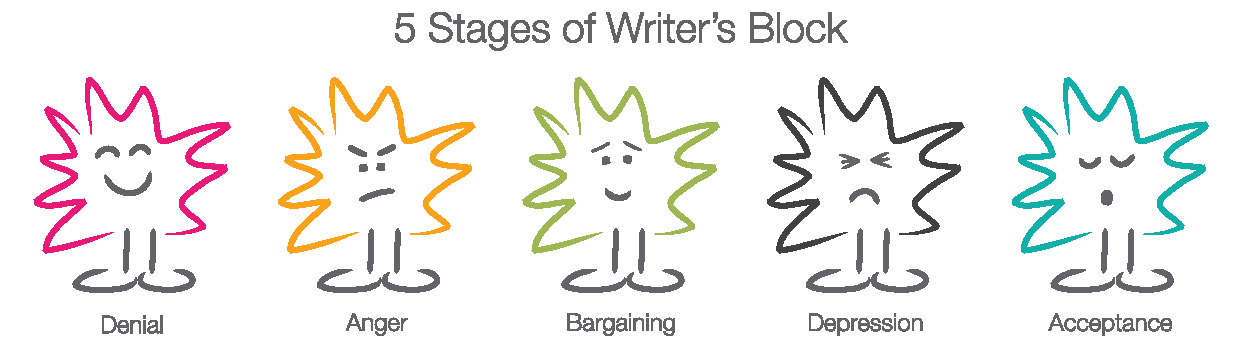
    5Stages-WritersBlock


    I have found while writing test plans, or test cases, procedures or documentation; a break can refresh, change perspective, distract and inspire.

    Simple things like taking a walk, making a cup of tea, or quickly browsing for the latest cat memes. Amazing what you can think of while doing something else.


    I attended EuroSTAR in Gothenburg, in November 2013 and aside from finding the amusingly named chocolate brand Plopp, the highlight for me was the talk by Zeger van Hese (@testsidestory) on the subject ‘Testing in the age of distraction’. The YouTube video of this talk can be found here.

    This is a great talk and I encourage you to take the time to listen to it all.


    I will be spending next week at EuroSTAR in Copenhagen, as part of the Community Huddle team.

    I am excited to meet a huge variety of testers from all over the world, engaging with and inspiring each other.

    Conferences have a canny knack for reinvigorating and inspiring, I will meet this week with great expectations and anticipation.

    If, you’ll be at the conference, please come and say hi, get engaged, plugged in and get the most out of your conference experience.


    Blog post title lyrics from: Writer’s block – by Fatlip.

    Find all the songs from my blog posts at this Spotify playlist.

  • Under pressure that brings a building down…..

    Under pressure that brings a building down…..

    …..Splits a family in two.

    What springs to mind when you hear the term gatekeeper?


    The role of a tester can often become synonymous with that of a gatekeeper?

    Is that symptomatic of buck-passing?

    Whose responsibility is the quality of your product?

    Who cares?

    notmyproblem.png


    My first role as a tester was officially a Quality Assurance Technician, in a waterfall environment, sat in a different building to the development team. Direct communication via anything other than the bug tracker was forbidden and progress was slow. The bug feedback loop was slow, by the time they had filtered back to the dev team, they had moved on from that feature.

    Whose responsibility was the quality of the code?

    What was their definition of done?

    Did I know? Heck no!

    ignorance-bliss-bliss-feeling-ignorance-snake-bird-demotivational-posters-1361407042


    As time passed, I gained a greater level of understanding, the process was convoluted and very political.

    yo-dawg-i-whats-the-point-anymore

    Without visibility or an understanding of the process, it was very easy for a tester to become very demotivated.

    If my inferred identity as a tester was to raise bugs, to be as nitpicky as is humanly possible, to assure quality, then what was my purpose if I entered bugs, then received either no feedback or had my bug closed as ‘won’t fix‘?

    It is very easy to feel, as a tester, in that scenario, that you are the last bastion of quality, he (or she) who is there to maintain the quality of the software that is being released.

    In that scenario, how would you approach your role as gatekeeper? Would you ever be satisfied? I’ve always stood by the fact that no software is bug free. I’ve even seen situations where a developer has handed a new feature to a tester, with the promise of cake if any bugs are found……guess what happened there?

    I digress….


    In Agile, we have self-organised teams, primarily of testers and developers, who have an agreed (and not static) definition of done. By those agreed criteria, we should have a ‘potentially shippable product’ by the end of each sprint. However, the third amigo, is the Product Owner.

    I have often mentioned that the role of a tester is as an advocate for end-users, but within a development role, we can still have a bias, or even be blind to a product that we are so close to.

    The product owner is responsible for communicating the vision of the product and product road map to the Scrum team. She is responsible for defining the order of the work items through the product backlog for a release and for deciding when the product has to be shipped. That means the product owner is responsible for defining and managing the releases. The initial release planning is done in the beginning of the project and readjusted at the end of each sprint, based on each sprint’s outcome. Hence the product owner should work with the team to estimate the number of product backlog items and determine the number of sprints needed to complete them for the release. If the date is missed, the opportunity is gone, and launching the product no longer makes sense.

    Ref: https://www.scrumalliance.org/community/articles/2015/january/the-10-things-i-know-about-product-owner

    Someone has to make the go/no-go call on a release. That role is the Product Owner.


    I haven’t always had pride in the released software that I have worked on. But, there has to be a well-rounded call made to release a product. It isn’t something that we always get right, but knowing where the decision needs to be made means that we aren’t stuck in a perpetual loop over unreleased software development.

    It can be an impossible task at times, it isn’t possible to please everyone. But, decisiveness informs and enables direction. They may not be popular, but I for one, am glad we have Product Owners.

    house.gif


    Blog post title lyrics from: Under pressure – by Queen and David Bowie.

    Find all the songs from my blog posts at this Spotify playlist.



  • All the kids in the marketplace say…..

    All the kids in the marketplace say…..

    …..Walk like an Egyptian

    The software industry is in a continuous state of change, testing is no different.

    There are few hard and fast rules and it’s fair to say that one size doesn’t fit all.

    One-size-does-not-fit-all.jpg

    That’s not to say that there aren’t themes and trends that are sensible to follow.


    Having recently completed a very thorough and engaging Agile refresh training course, I had chance to take stock of our testing strategy versus that which was put forward by the trainer.

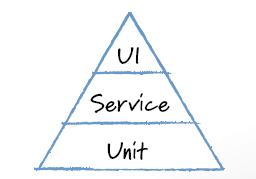
    Invariably, Mike Cohn‘s test pyramid model appeared at the forefront.

    Testpyramid

    The emphasis of this model is that of automation, heavier at the base of the pyramid with unit testing, then with service (also read API layer or acceptance) tests. Finally, UI testing at the top, requiring fewer tests, as defects should not be so prevalent higher up the pyramid. This comes accompanied with a y axis running upward to represent cost of implementing the tests, both in implementation and in speed of feedback.

    These are all very valid points. But, to follow this model and this model alone is dangerous.

    Lisa Crispin has a fine overview of Agile testing available on her website http://lisacrispin.com/downloads/AgileTestingOverview.pdf

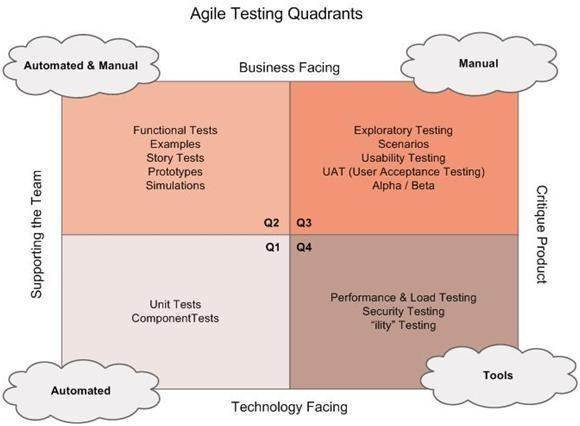
    She mentions the Agile Testing Quadrants and the shared responsibility of the whole development team in Agile.


    If you spend a little time Googling around the subject of the testing pyramid model, you can find a common thread of arguments for and against adopting the model.

    The truth is that even if your organisation is running Agile, there will likely be many flavours of the methodology in use. The approach to testing is no different.

    You have to find your own way, to cover what works best for your team, your skillset and your customers.


    There are, of course variants of the testing pyramid model, where it is inverted (ice cream cone), often used as an example of what is wrong with UI heavy and Unit test light development.

    However, Noah Sussman made one that makes a little more sense.


    I am a staunch believer in the quality and importance of humans as testers and the use of automation to be used to ‘check’ (another well trodden path of friction for many testers). Del Dewar‘s post The Testing-Checking Synergy explains this better than I.

    testing-checking.png

    If you’re not testing, you’re not uncovering any information, and in your not uncovering any information, you’re simply confirming nothing more than speculation about what your product may (or may not) do, and there’s an enormous amount of information that you don’t (and may never) know about your product.

    notesting-checking.png


    The only message, I guess I’m trying to articulate is that there is so much value in testing throughout the SDLC, automation enabling and informing testing, so that a product can be released with a greater sense of confidence in its quality.

    Our approaches and practices should evolve through time, we learn from our mistakes and we improve and move with the times. The importance of staying relevant and continuous improvement is what should be our key drivers.

    I am eternally grateful to all those who take their time to share their thoughts and practices via social media, blogs, vlogs, podcasts, workshops, webinars and conference talks.


    Blog post title lyrics from: Walk like an Egyptian – by The Bangles.

    Find all the songs from my blog posts at this Spotify playlist.

  • Lights will guide you home and ignite your bones…..

    Lights will guide you home and ignite your bones…..

    …..And I will try to fix you

    Who doesn’t love themselves a bit of bug triage? Answers on a postcard, please.

    “Triage is medical term referring to the process of prioritising patients based on the severity of their condition so as to maximise benefit (help as many as possible) when resources are limited.

    Bug triage is a process where tracker issues are screened and prioritised. Triage should help ensure we appropriately manage all reported issues – bugs as well as improvements and feature requests.”

    Ref: https://docs.moodle.org/dev/Bug_triage


    Bug trackers can be a massive headache. How we handle bugs, if at all, can be a matter for debate. Here is my triage tale.

    3861f959b51f1acdbf607a520746e257

    A mountain of bugs is horrific, it doesn’t paint a great picture for the health of your project. Especially if they’re live (read: open).

    bugs

    There are three considerations that we have narrowed down to:

    1. Bin the lot, throw them away and start again, ensure this horrible mess never rears its ugly head in this state again.
    2. Close all bugs older than XX months, ensure this horrible mess never rears its ugly head in this state again.
    3. Triage the lot, retain those that are still applicable, ensure this horrible mess never rears its ugly head in this state again.

    I’ve already stated before my love of data. So, knowing that, I need to be mindful.

    “I am drawn to collect and retain all the data that is humanly possible, almost as a gut reaction. But, on reflection, is all the data really what I need? What my company needs?”

    Ref: We can celebrate the highlight…..

    However, I am really not keen on options 1. or 2. – there could potentially be some very valuable information, or issues not dealt with yet and arbitrarily closing them off has potential to be careless.


    We are moving from one bug tracker to a different all encompassing super-tool (exciting times). So now is the time for change, and I am going to seize it. What has happened before isn’t sustainable.

    I’m going for the long route, and here’s the plan, two pronged:

    1. Perform triage on the existing issues, only porting those that remain valid to the new tool.
    2. Collect and collate the bug tracker users’ requirements and feedback from the old bug tracker (and its processes). Using that along with informed expertise from myself and interested parties, to correct the process and implement a more robust bug handling and lifecycle process.

    The email for feedback is out now, the replies are coming in, this is happening. Triage on legacy issues is also taking place, it is arduous and can be time consuming, but I’m grateful for those helping and for the opportunity to try to tackle it.


    Blog post title lyrics from: Fix you – by Coldplay.

    Find all the songs from my blog posts at this Spotify playlist.

  • And we’re all gonna shine a light together…..

    And we’re all gonna shine a light together…..

    …..All shine a light to light the way

    It’s Eurovision week, so why not see where Software and/or Software Testing has its familiarities with the world’s biggest song contest?


    Today’s six themes are:

    1. Wisdom at the top
    2. Politics
    3. Languages
    4. Variety
    5. Results
    6. Misconceptions

    Wisdom at the top:

    Jerry Weinberg and Jon Ola Sand.

    Jerry Weinberg is one of, if not the, most respected and revered in (but not limited to) the testing community. When he speaks, we listen. He is widely read and quoted by many (myself included). Check out his vast library at geraldmweinberg.com

    Jon Ola Sand is the European Broadcasting Union’s Executive Supervisor of the Eurovision Song Contest. Without his say so, the contest does not proceed. He always has a very awkward cameo in each show, to ratify the results before they are announced and has even been known to butt in and correct them live.


    Politics: (Loose association)

    dilbertI’m generalising here, but politics can be unavoidable, be it office politics, national or international.

    In the office, it’s possible that testers have to do a bit of politicking to get the job done. The soft skills required to be a tester often are undersold in job specifications.

    back-in-my-day-politics-didnt-have-any-influence-on-14059027

    However hard they try, politics is never far from the Eurovision Song Contest. There are many examples of this, but Georgia’s 2009 entry ‘We Don’t Wanna Put In’ by 3G and Stephane was not allowed to compete as there was possibly subtle reference to a certain nation’s leader, with whom their own good nation had more than a few disagreements.


    Languages:

    There are a lot of obscure languages out there, and so many can be found in testing. TCL, Python, C# are a few that come to mind that are more dominant.

    I’d be interested to see some of those listed on the Esoteric programming language page on Wikipedia used in testing.

    In Eurovision, English appears to be the primary language. Indeed, the presenters are required by the EBU to present in English and French. Since the rules changed to allow acts to choose any language to perform in, English has been the predominant language sung.

    However, that hasn’t stopped some standout performances in other languages. Amaury Vassili represented France in 2011, with the song ‘Sognu’ in Corsican. Last year’s winner, Jamala, won for the Ukraine singing in Crimean Tatar (and English).


    Variety:

    It takes all sorts to make a tester. It is rare to find testers with identical backgrounds and experience. I’ve  worked with testers who trained to be programmers, studied performance art, history or even hold an MBA.

    It means that a well qualified person on paper, may not be an ideal candidate.

    Eurovision takes all sorts, in fact often it is a different style of performance that ends up winning. We’ve seen rap in 1995 from Love City Groove (UK), to classic pop in 1974 with Abba (Sweden), rock in 2006 from Lordi (Finland) to a group of old ladies singing in 2012 Buranovskiye Babushki (Russia).

    Cliff Richard failed in two attempts to win the competition!


    Results:

    Test results should be a clear reflection of the state of the software under test, but I have heard the integrity of the results challenged many times. I’ve even seen tests and results tweaked to achieve the desired result.

    eurovotes2

    http://rocr.xepher.net/weblog/eurovotes2.jpg

    The results in Eurovision are an oft disputed topic among fans and detractors alike. The formula is often tweaked to attempt to achieve the desired ‘fair‘ outcome. We now have a 50/50 split between industry expert voting and public voting per participation country.

    Boy, do those results take a long time to get through.


    Misconceptions:

    Do you find there are a few misconceptions about what the role of testing is in the SDLC?

    There are countless examples of this from job titles (what is Quality Assurance anyway?) to responsibilities (should testers be the gate keepers or should that be the whole team?).

    brexiteurovision

    I don’t know how many people asked me if Brexit would mean that the UK wouldn’t be in Eurovision, but it is a great example of the competition’s misconceptions.

    The EBU and the EU are not the same thing, thankfully. The EBU includes many nations that are not European (insert definition of European here). Israel, Jordan, Lebanon and Morocco are all EBU members, while Australia (associate member) are in their third year.


    Blog post title lyrics from: Love shine a light – by Katrina and the Waves.

    Find all the songs from my blog posts at this Spotify playlist.

  • Said you’re running out of time…..

    Said you’re running out of time…..

    …..what do you mean?

    Have you ever been working on a project and you weren’t totally sure of your customers’ requirements, or worse still, how they might use your product?

    I have found that I have approached the software that I am testing differently, depending on my own perception as a potential user.


    Working in the games industry, it was easy to identify who an end user might be, especially as I played a lot of games in my late teens and early twenties.

    I read reviews, talked to others who shared an interest and formed my opinions on different products in the market.

    I had a strong view on what I wanted and would actively seek that out.

    EndUserVenn


    Working in the smart energy sector, I understood as a user how I may use and benefit from the products I was testing.

    However, I rarely read reviews or shared conversations with friends about the sector, about how as a user I may benefit from the product.

    I didn’t have a strong view on what I wanted, I just wanted the benefits.

    This meant that I was less connected with the product I was testing everyday.

    Venn2.jpg


    In my current role, I was in danger of being disconnected with the end user once again.

    How could I truly represent the customers’ needs in validation testing, if I did not understand how the customer would use our product?

    vandv

    http://www.softwaretestinghelp.com/what-is-verification-and-validation/

    After the initial induction, I was asked if I thought there were any additional training needs. Straight away I was compelled to ask to see how our customers use our products.

    We are blessed to have hardware engineers who are end users for some of our products in the same office. But, there’s always that niggling feeling that something can, and likely will be missed.

    Just last week, one of those training needs was met, in a real life environment. Myself and several other engineers (test and development) were taken out of the office for a day, we were in a real life workshop, of an end user, who uses our tools for automotive diagnostics. We were walked through how our tools interface with different vehicles, how they are really used to diagnose faults and we got to hear how a real user feels about the tool.


    Simulations, debug tools and the like are all exceptionally valuable in development. But, without knowing the end user, what they use the products that we work on and how they feel about its use, how are we truly going to deliver the best product.

    Yes, we have business analysts, product managers, customer support and sales teams available to answer queries and represent the end user. But, that can introduce company bias or even a situation with Chinese whispers.

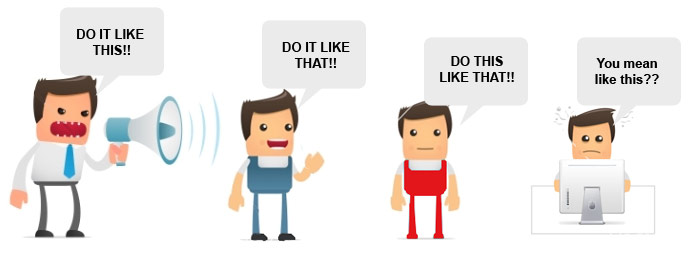
    ChineseWhispers


    I now know more about one of our tools, how it is used and I can apply that to my validation testing. This along with clear requirements, open cross-discipline communication and the access to (hopefully) honest customer feedback, can only take my targeted testing and my goal to be a customer advocate closer to those days when those lines between end user and tester were so much closer.


    Blog post title lyrics from: What do you mean? – by Justin Bieber.

    Find all the songs from my blog posts at this Spotify playlist.